Friday, October 21, 2011

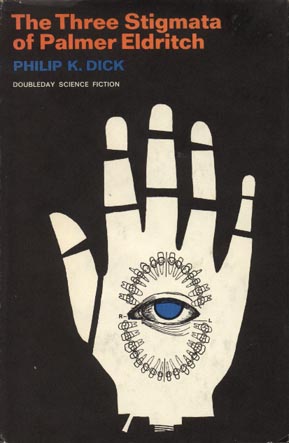
PKD book covers illustrating religious themes (and a few merely freaky ones)

Philip K. Dick book covers are notorious for being psychedelic, and also for seldom having much to do with the content of the novel. But they are often striking, and sometimes end up illustrating his religious themes in interesting (often hilariously unintentional) ways.

Go to the excellent archive here for more.


Thursday, October 20, 2011

quick thoughts on "undermining ontology" in McKee's new PKD article

Gabriel McKee is the author of "Pink Beams of Light from the God in the Gutter." You can read Umberto Rossi's SF Studies review here (scroll down to find it).

His new article on Philip K. Dick is the latest effort by a PKD scholar to briefly summarize Dick's religious experiences in the context of his novels. As in his book (and reminiscent of Umberto Rossi's recent book), McKee emphasizes the "ontological uncertainty" aspect of Dick's novels. I can understand why PKD apologists often try to sell Dick in terms of this uncertainty, but I am worried that this emphasis can be misleading when it comes to Dick's philosophical and religious writings. I am not convinced that "ontological uncertainty" is the main point of Dick's novels either, as McKee seems to imply when he writes that "Dick’s stories serve to undermine the readers’ faith in ontology—he is poking the universe with a pin to see if it pops." This strikes me as a dangerously glib reading. It is certainly the case that Dick narrates an undermining of his character's faith in ontology, but I don't see how we can boil down his entire literary output to such a simple message. Dick wrote as much as he did as a "fictionalizing philosopher," as well as in nonfiction form, because he was obsessed with the problems of epistemology and ontology--not because he felt that he had already solved them. Undermining faith is certainly one of the philosophical moves he employs, but I doubt that Dick would have the following he does if it was the only trick in his book.

McKee proceeds from explaining the nature of Dick's fictionalizing philosophy to Dick's theological writings, applying this reading of ontological uncertainty. Dick's theology according to McKee is fundamentally speculative; he never ends up with a permanent theory. He writes:

"Dick presents all of this as theory, and never as fact—or rather, he presents it as fact, and then promptly pulls the rug out from underneath each explanation. Throughout the Exegesis, Dick declares that, “at last,” he has found the ultimate explanation—but, within a page or two, he second-guesses every eureka. Thus the theology of the Exegesis is speculative: it proposes much but asserts nothing. It is, ultimately, not about the answers, but about the myriad possibilities that the questions themselves imply. It is a theology built on doubt—indeed, it throws the very division of faith and doubt into question."

While I don't disagree that doubt is an important aspect of Dick's philosophizing, I am not sure that we can apply doubt as a key to his theology quite so easily. Something other than doubt motivated Dick to do the work that he did, which consumed the last eight years of his life (and annoyed many jealous fans and critics who wish that he had written more SF novels instead.) My impression from reading Dick's descriptions of his experiences is that he did indeed have no problem endlessly spinning theories, but he was doing theology because of the things that he found difficult to doubt. Sometimes I see Dick as the other side of the R.A. Wilson coin: whereas RAW's put-on method was a largely destructive enterprise in an effort to "wise up the marks," with Dick we see a man obsessed with experiences that cannot be explained away by the usual method of doubt.

See also McKee's ranking of PKD Adaptation from best to worst.

Tuesday, October 11, 2011

God has Eaten Man


"Man has not eaten God; God has eaten man."
-Philip K. Dick, The Man in the High Castle (1962)

Monday, October 10, 2011

Philip K. Dick on Religion, Science, and Belief in Voices from the Street


"There's nothing left of religion! You go to a church and the minister reads out of a best-selling novel. He's nothing but a psychologist. They go out and tell soldiers it's fine with Christ to kill the enemy - that's what God wants."

"It's scientists who've got us where we are, tampering with the universe. Scientists with their bombs - science is the devil's way."

"Do you understand what the prophets were?...The impact of great things yet to come impinged on their minds. Everything they saw will come about; but these events were of such foreign and awesome nature that only by rendering them in elaborate poetic imagery could they translate them into the diction of the times, and represent the events to themselves."

"Nobody decides who can be saved. Nobody selects, like a draft board picking eligible men. You're saved for the same reason a ball rolls downhill - because of natural laws."

"Don't you believe in anything anymore?"
"Nothing that exists. What I believe in is bullshit."

"I'm not loyal to anybody… It never occurred to me to be loyal to a person - only to an abstract ideal… And then I wonder why I can't find something to believe in."

again stolen from Palmer Eldritch's PKD Project

Thursday, October 6, 2011

Essential Books for the Study of Philip K. Dick and Religion

If you're interested in getting any of these books, please consider buying them through these links to support my research and writing. (Turn off Adblocker if you can't see the links.) See the links on the sidebar of this blog for many free readings and Google Books previews on PKD.


The Shifting Realities of Philip K. Dick: Selected Literary and Philosophical Writings


The Exegesis of Philip K. Dick


Philip K. Dick and Philosophy


Laurence A. Rickels--I Think I Am: Philip K. Dick


McKee


Letters 1980-1982


Letters 1977-1979


Letters 1975-1976


Letters 1974


Umberto Rossi--The Twisted Worlds of Philip K. Dick


Lawrence Sutin--Divine Invasions: A Life of Philip K. Dick


Greg Rickmann--To the High Castle


Samuel Umland--Philip K. Dick: Contemporary Critical Interpretations


Philip K. Dick Library of America Valis trilogy and Maze of Death


Kim Stanley Robinson--The Novels of Philip K. Dick


Anne R. Dick--The Search for Philip K. Dick


Tessa B. Dick--Remembering Firebright


Emmanuel Carrere--I am Alive and You are Dead

Tuesday, October 4, 2011

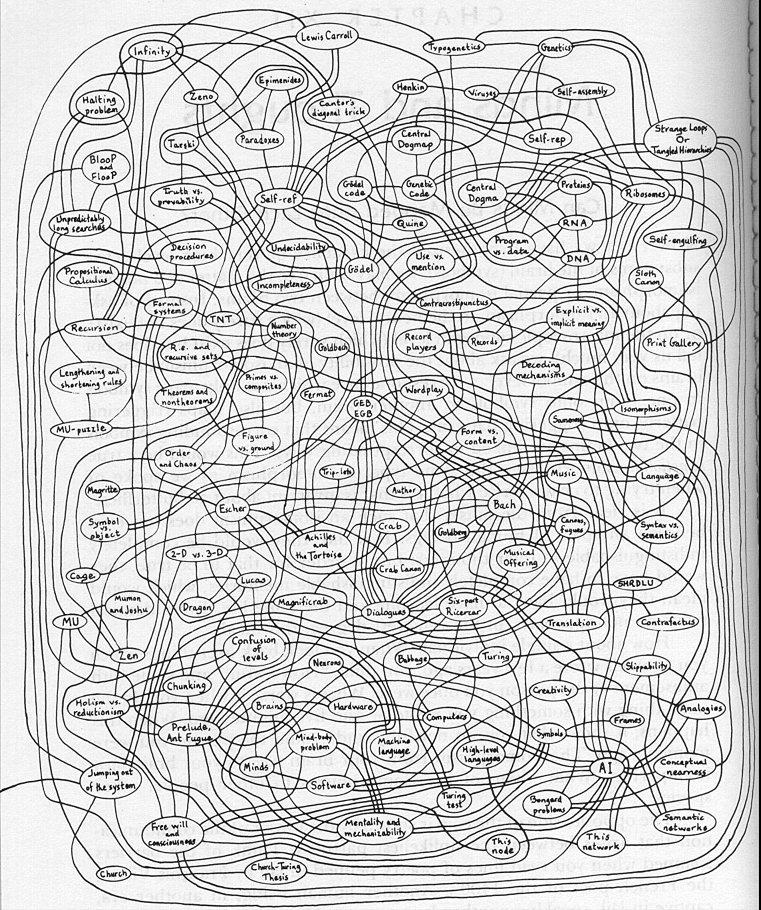
PKD and Godel Escher Bach


In one of the Selected Letters from the 80s Phil gushes about reading GEB, which he loved and felt explained his literary method of philosophical puzzle stories. He mentions his letters to Ursula Le Guin, who he says never understood what he was trying to explain. But now that Godel Escher Bach exists his words should be intelligible. This is not an exact paraphrase and I'll post an excerpt later. Meanwhile here's a bunch of relevant/fun images I found searching Google Image