Sunday, September 2, 2012

Robert Anton Wilson on meeting PKD / Phil Dick on RAW?

Phil Dick and I had a long conversation one afternoon at Santa Rosa, and it was only a year later that I found out that he and I had exactly similar experiences at approximately the same time, which left both of us wondering if we'd been contacted by god, by the devil, by an extra-terrestrial from Sirius or by some evil parapsychologist working for either the CIA or the KGB, or if we had just gone temporarily crazy. Then I realized this whole long conversation was Phil's attempt to find out how crazy I was. If I was sane, there was a chance that he was sane too. But if I was crazy, that increased the probability that he was crazy. He apparently decided that I was sane enough that he could trust that he was possibly sane too, so he started publishing some of his experiences, which now are in several books: Valis, The Divine Invasion, The Transmigration of Timothy Archer, Radio Free Albemuth and the Exegesis. My accounts of similar experiences are in Cosmic Trigger Vol. 1." "Memories of Phil" 
Source: PKD Otaku #11

Here is a post about the meeting between RAW and PKD that Tom Jackson shared, which includes n amusing quote from SF author David Hartwell:

It got down to Robert Anton Wilson and Philip K. Dick talking. And at a certain point, I could not follow what they were saying, and so I just left and went out and got a beer and came back later. They were still talking.

Robert Antone Wilson wrote a few articles about PKD.
The Return of Philip K. Dick - A Review of Philip K. Dick:The Dream Connection
"The Black Iron Prison" in his Cosmic Trigger III: My Life After Death
Scattered mentions of PKD theories in Everything Is Under Control: Cults, Cover-Ups and Conspiracies

Here is what RAW says about PKD in a 1986 preface to Cosmic Trigger 1: The Final Secret of the Illuminati


"In this connection, I am often asked about two books by other authors which are strangely resonant with Cosmic Trigger -- namely VALIS by Philip K. Dick and The Sirian Experiment by Doris Lessing. VALIS is a novel which broadly hints that it is more than a novel -- that it is an actual account of Phil Dick's own experience with some form of "Higher Intelligence." In fact, VALIS is only slightly fictionalized; the actual events on which it is based are recounted in a long interview Phil gave shortly before his death (see Philip K. Dick: The Last Testament, by Gregg Rickman.) The parallels with my own experience are numerous -- but so are the differences. If the same source was beaming ideas to both Phil and me, the messages got our individual flavors mixed into them as we decoded the signals.

I met Phil Dick on two or three occasions and corresponded with him a bit. My impression was that he was worried that his experience was a temporary insanity and was trying to figure out if I was nutty, too. I'm not sure if he ever decided."

Dick read Wilson's Cosmic Trigger and mentions it in the Exegesis. He wrote a well known blurb about it:

"Wilson managed to reverse every mental polarity in me, as if I had been pulled through infinity. I was astonished and delighted." 

But I haven't been able to find much information about PKD on RAW. If anybody knows anything I don't know, please do chime in.


 a commenter on a post about RAW/PKD posted this:

"In _Philip K. Dick: In His Own Words_,ed. Greg Rickman, p.55, PKD talks about a little about his acquaintance with RAW and that both of them agreed on their fascination with conspiracy theories, that they tink about CTs in similar ways, including the "absurd" idea that there's something benevolent "behind it all."

In the book _To The High Castle_ by Rickman, on page X of the Foreword, Tim Powers wrote that some "critics" put forth the rumor that PKD's correspondence with RAW caused PKD to go over the edge. Something like that. I don't have that book on hand. Anyway, I've never gotten a good answer: WHO? What "critic" put forth that idea?"  http://www.rawillumination.net/2010/11/raw-on-philip-k.html

here are a few mentions of RAW in PKD's Exegesis

[30:15] ... Leary's work suggests that every atom contains the "brain" of the whole universe."... This is also the basic axiom of magic ... stated in the tale of Hermes in the famous sentence, "That which is above is in that which is below." ("The macrocosm is within the microcosm.")But the McKenna theory goes far beyond this....We are riding not one but 64 evolutionary waves all mounting toward a cosmic awakening something like the Omega point suggested by paleontologist Teilhard de Chardin.* [Editor's note: from Robert Anton Wilson's Cosmic Trigger, 1977]  ...Thus I lived out this process the McKennas described, somehow cut loose from objective time.... All I had to do was turn to my grand theme (e.g., in Maze, in Stigmata and Eye, etc.) and perceive our composite (mixed universe) as irreal (i.e., hologrammatic). Tessa saw this at once.

 [1:121]  So if you push essence far enough in terms of ascending levels, you find you have gone a full circle, and you wind up encountering ultimate deity cooking and writing pop tunes on the radio and popular novels, and a breath of wind in the weeds in the alley. It's as if the ultimate mystery is that there is no mystery—it's like what Robert Anton Wilson says in the Cosmic Trigger about being outside the Castle when you think you're in, and inside when you think you're out. And in a way what is most paradoxical is that I said it all in Ubik years ago! So in a way my exegesis of 2-3-74 says only, "Ubik is true."

[30:11] The real conspiracy goes much deeper than conspiracy buffs (such as Bob Wilson) suspect, although he almost had it in the theory that our universe is a hologram created by the intersection of two hyperuniverses.

And in VALIS: "I've read The Cosmic Trigger and Robert Anton Wilson says--" [Kevin gets cut off by Mini] (p. 204)

Saturday, September 1, 2012

PKD Cutups


Confessions of a Counter-Crap World Artist

A Scanner Time-Slip

The Wub Who Japed

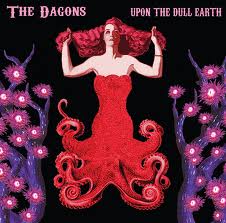
Upon the Dull Mars

The Shifting Realities Whose
Teeth Were All Exactly Alike


The Dark-Haired Glimmung

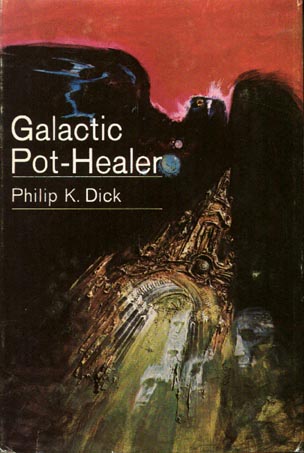
Galactic Puppet Healer

Puttering About in a Small Eye in the Sky

We Can Build Simulacra You

Flow My Three Stigmata, The Eldritch Policeman Said

We Can Kipple It For You Wholesale

Humpty Dumpty in The Broken Bubble


The King of the Indefatigable Frog

Expendable Unchance

I Hope I Shall Arrive Not By Its Cover

The Short Happy Life of the Crystal Crypt

The Eye of the Meddler

A World of Fair Game

Psi-Man Heal My Clay Feet

Foster, You're Human.
A Maze of Ubik

Beyond Lies The Little Black Box

The Man In The High Darkly

Vulcan's Hammer Japed

Radio Free Crack In Space

Bloodmoney Lottery

Friday, August 31, 2012

Dreaming of Printed Matter

"In the last of the four dreams yesterday I caught sight of the copyright date on the book and another look at the typestyle. It was dated either 1966 or possibly 1968 (the latter proved to be the case). So I began studying all the books in my library which might fit these qualifications. I had the keen intuition that when I at last found it I would have in my hands a mystic or occult or religious book of wisdom which would be a doorway to the absolute reality behind the whole universe.

Of course the possibility existed that I didn't have the book in my library, that I would have to go out and buy it. In several dreams I was in a bookstore doing just that. One time the book was help open before me with its pages singed by fire on all sides. By that I took it to be an extremely sacred book, perhaps the one seen in the Book of Daniel"
...
P.S. This is on a level, and it goes to show you that you should never take your dreams too seriously. Or else it shows that the unconscious or the universe or God or whatever can put you on
From a "Dear Claudia" letter

PKD and the great historiographers of religion


In a classic article on "Upon the Dull Earth," Umland said something that I like a lot, about how we need to approach PKD through the great historiographers of religion. This little line in a big paper detailing the Dickian Dionysian has been a big inspiration for my project looking at Dick's religious influences. As Erik Davis put it in his recent podcast chat with David Gill, Dick was a comparativist, following and extending the project of Jung, Campbell, and the whole Eranos school. But I'd complicate Umland's argument by noting that we need to be very careful because Dick made his own use of the figures that he read, working from spotty memories of encyclopedia readings (as well as, it must be admitted, some legitimately deep reading for example in Jung). He's taking what he learns from the great comparativists and giving it a Dickian twist. This allows him to do some wild theorizing which we can learn a great deal from, but it must also be understood that while much of this theorizing was serious, at other times he was spinning out esoteric systems as a joke, or for fun. I've had some interesting conversations with Davis+Gill lately about the importance of PKD the bullshitter, in the context of the American tradition of weird conversation. Dick's theories shouldn't necessarily all be taken at face value. Gill has been doing some good ranting lately vs. the notion of Dick as doing "endless theorizing," which I agree isn't the right model. He looks a lot less crazy if you understand that he wasn't totally fooled by everything that he cooked up. There are some core beliefs that are important, and Christianity plays a huge role. There are the powerful religious experiences, which of course are a big deal and color things, but as Gill emphasizes there is a consistent and thoroughgoing skepticism as well. But none of this means that Dick totally lost it. If we keep his healthy sense of irony in mind we can learn a lot more from what he is doing. There's a certain rigor to be admired, and there's certain discomfort associated with understanding the pain that drove him to doing all this thinking. But what he produced is a wonderful theory resource. We see Dick engaging with the state of the art of comparativist study of religion, struggling with some heavy really heavy philosophy stuff, deeply affected by the Nag Hammadi discoveries and developing strange insights into gnosticism and early Christianity. I've been working lately on the early modern, renaissance, and medieval mystics and esoterics that Dick delved into, and we should understand him as engaging with (what he understood as) their theories of religion as well.

Friday, August 24, 2012

Jay Kinney on The Exegesis


"The Philip K. Dick I've discovered in the Exegesis reminds me of two other unique visionaries: Antonin Artaud and Emmanuel Swedenborg. All three delved into alternate realities with unique results. But Artaud was ultimately deemed mad, institutionalized, and subjected to massive electro-shock therapy. Swedenborg died peacefully, respected (and feared) for his elaborate visions of heaven and hell; and after his death his followers founded a new church centered around his revelations.

"Luckily, Phil didn't have to suffer Artaud's fate, but it remains to be seen whether the Exegesis lends itself to the creation of a new Dickian religion. The possibility is a little grotesque, but stranger things have happened—many of them in PKD's own writings."
PKDS #3

Friday, August 17, 2012

Revised schedule for the Philip K. Dick Festival


SATURDAY
9:45-10:00 Opening Remarks - David Gill


10 - 10:30 Gregg Rickman - Dostoevsky and Dick
Independent scholar, author of three books about Dick, PKD biographer,

Track A
10:30 - 11 “Do Scientists Dream of Electric Thought Experiments”

Dr. Charles Reid

Scientist at Lawrence Livermore National Laboratory exploring how scientists can manufacture knowledge using computer simulations.

Track B

Picturing Neo-noir Consumerism in PKD Comics by Dore Ripley

The current crop of comic adaptors and artists has taken Electric Ants and Do Androids Dream of Electric Ship? as well as DADOES’ authorized prequel Dust to Dust and imagined worlds that are strangely familiar. By mixing 21st century culture (new to PKD) with what current artists/adaptors see as neo-noir sensibility, comics have created a dissonance between past, present, and future.

Doré Ripley is an instructor at California State University, East Bay and Diablo Valley College. She publishes on a wide variety of topics and genres from fairy tales, medieval literature and Shakespeare to science fiction and comics.

Track A
11 - 11:30 Philip K. Dick and Drugs

Chris Rudge

PhD student at University of Sydney writing a dissertation on PKD, Aldous Huxley, and drugs.

Track B

Brad Scheiber

PKD and Corporate/Political Paranoia:

A discussion of PKD works including A Scanner Darkly, Do Androids

Dream of Electric Sheep and the short story “Sales Pitch” and the

depiction of corporate and political subversion and malfeasance and

its parallels in American culture from the 1960s to today.

BRAD SCHREIBER has written for all media, is the author of six books

and adapted the PKD story “Sales Pitch” for National Public Radio.

Noon - 1 LUNCH

1-1:30 Neoplatonism and the Problem of Dick's Christianity

Ted Hand Webmaster, Philip K. Dick and Religion blog

ESL teacher. MA student in Religious Studies at Graduate Theological Union working on Renaissance Magic and Western Esotericism.

Religious Studies Approaches to Philip K Dick
Erik Davis

One of the editors of PKD’s Exegesis. Author of Techgnosis, The Visionary State, Nomad Codes, and many other books and articles dealing with myth, magic, technology, and contemporary culture. PhD student at Rice working in the gnosis department with Jeffrey Kripal.

2 - 2:30 Rudy Rucker - “Haunted by Phil Dick”

Science Fiction author, mathematician, computer scientist, badass

Track A
2:30 - 3 Doug Mackey Out of Time’s Joint Time is a central concern in Dick's work, and the question of the reality of time

underlies, I believe, his themes and variations on the nature of reality.

We apply the principles of orthogonal time as defined in Dick’s writings to key novels where Time is a theme, particularly Time Out of Joint, Dr. Futurity, Martian Time-Slip, Counter-Clock World, and Now Wait for Last Year.

Doug Mackey is author of a book on Philip K. Dick for Twayne; presented a paper on PKD at SFRA in the 80s; wrote the introduction and edited the book The Reality of Time by Janet Iris Sussman (2005); author of the Dickian novel Weird Scenes Inside the Godmind (2001).

Track B
David Duffy author How to Build an Android

A discussion of David Hanson’s PKD Android, its construction, development, and decapitation, as well as Duffy’s book How to Build an Android.

3 - 4 Precious Artifacts

Henri Wintz Webmaster of The Philip K. Dick Bookshelf

David Hyde, “Lord RC” author of Pink Beam: A Philip K Dick Companion

Authors will discuss their new PKD bibliography, Precious Artifacts. Discussion to be followed by “Antiques Road Show”-style show and tell of PKD Collectibles (fans encouraged to bring things for appraisal)

Track A
4 - 4:30 Self-induced Amnesia
James Burton

Currently finishing a book about PKD and Salvation in Science Fiction to be published in the UK in 2013.

Track B

Stefan Schlensag, organizer of the 2012 PKD Conference in Dortmund will tell us about PKD Studies across the pond.

5 - 6 PANEL DISCUSSION: PKD And The Next 30 Years: Lethem, Rucker, Rickels,
John Alan-Simon (director, Radio Free Albemuth)
Moderator: David Gill

6:15 - 8 Dinner, Awards Ceremony

8 SCREENING: Radio Free Albemuth with Director John Alan Simon Thoral

Tuesday, August 7, 2012

Philip K. Dick on Paracelsus (from The Exegesis)

Okay. I have no doubt that the sort of space I experienced in the "Alto Carmel"
dream and the Voice dreams is Paracelsus' inner firmament. Thomas brought it with him,
along with the huge open books. That was the mind of Paracelsus, and it was infinitely
older and wiser than mine—and it embraced vast vistas, in terms of its "philosopher's
stone" comprehension of the mysteries of the universe. It acted as a micro-mirror of the
macrocosm. This is what generates the vast inner space: one man's little mind becomes this
magic mirror of the macrocosm. According to my push-pull psyche-world model, this is
readily susceptible to explanation: world is locked into the given psyche anyhow. They
aren't:

So psyche and world are 2 mirrors facing each other:
enriching capacity at both ends. This is the 3rd secret, this binary, mutual synchronized
enriching capacity. Could this be what Paracelsus meant by inner vast reaches of space,
mirror and imagination? A (the) world-generating power? That's

Inner space (of Paracelsus) is perhaps the key as to how the immortal man can be
transtemporal and transpersonal. This places world inside us—did I not, in 3-74, when I
regained my true vision, say I'd been seeing the universe backward? Perhaps I meant inside
out—yes, I felt we were on the outside, like the skin or surface of the balloon, and the
actual world was inside, with us outside. We are not at the center of the world looking up
and around, but outside looking in.

This kind of experience and wisdom goes back all the way to Pythagoras, to the
Orphics, and to Dionysus himself. It is the great core wisdom of all mankind, including the
Dibba Cakkhu enlightenment of Siddhartha the Buddha. I can say I am a Buddhist or even the
Buddha, that in Brahmanist terms I have an avatar in me; I am an Orphic, a Neoplatonist, a
Christian, a hermetic—all these statements are true; and also I have to some extent
formulated my own system (as Bruno did). I have seen God but it was not
God; it was more (and I have a cybernetics-biological model). I am with Boehme perhaps most
of all—and with his teacher, Paracelsus, most of all. And even with Heraclitus in his maxim
that "latent form is the master of obvious form"85 in my inner-outer, upper-lower Christ
versus Caesar system, and with Empedocles in his dialectic, and with Xenophanes in his
concept of God, or noös, and especially with Parmenides in his Forms I and II, of which
Form II (lower, outer, obvious) is not really real. Thus, as with the Gnostics, I am
acosmic, but with Spinoza in his monism—and a little Taoistic, too.   [3:74] Man as magic
micro mirror of the macrocosm, reflects (and hence contains) the map (or logos) of the
macrocosm replicated in miniature (cf. Bruno and Hussey on Heraclitus). He contains the
cosmos by containing this map or plan or logos of it; that's how it works! And since the
cosmos is alive and thinks the map is alive and thinks.

This transcends any given religion—transcends any partial, culturally-determined view, or
way of knowing. The hermetic cosmology serves best inner space, mirror, memory—Bruno and
Paracelsus. This was absolute knowledge and absolute wisdom. And, like an alchemical
transmutation, Zebra turning the irreal into the real. The totality of reality, micro- and
macrocosms seen in alchemical terms, in alchemical process from lower (base) to higher
(noble). Hence the info about mercury. If a human mind was involved it was/is one of the
greatest minds in human history. Were I to pick one I'd pick Paracelsus, but this is only a
guess.